
Interior Wall Framing - How to Frame a Partition Wall
Interior Wall Framing Basics
An interior wall is built the same way as an exterior wall - bottom plate, top plate, and studs spaced at regular intervals - but there are key differences. Most interior walls are non-load-bearing partitions, which means they only support their own weight and the drywall. This allows lighter headers, thinner lumber (2x4 instead of 2x6), and wider stud spacing in some cases.
The standard interior stud wall uses 2x4 lumber at 16 inches on center with a single bottom plate and a doubled top plate. Precut studs for an 8-foot ceiling are 92-5/8 inches. The wall is assembled flat on the subfloor - plates nailed to stud ends - then tilted up into position and fastened to the floor and ceiling framing.
Before framing, determine whether the wall is load-bearing or non-load-bearing. This affects header sizing, stud spacing, and whether the wall can be moved or removed later. Load-bearing interior walls carry weight from the roof or upper floors and require properly sized headers over every opening.
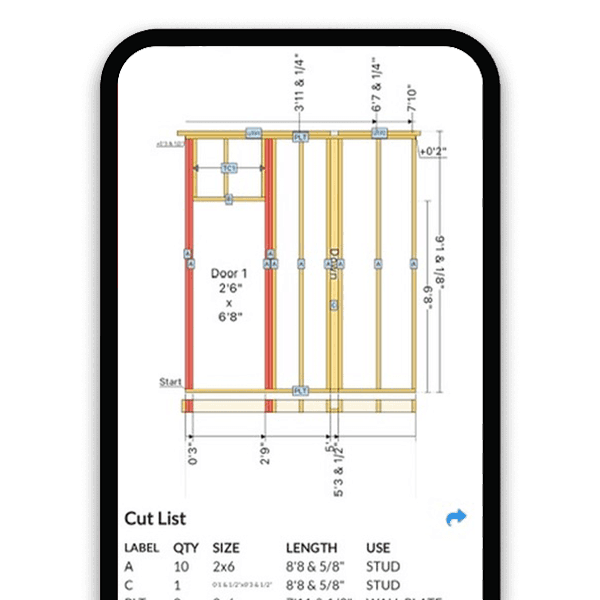
Interior Wall Framing Diagram - Anatomy of a Stud Wall
Understanding the parts of an interior wall is essential before you start building. Here is what every interior stud wall includes:
Bottom Plate (Sole Plate)
A horizontal 2x4 or 2x6 that sits on the subfloor. It anchors the wall and sets the stud positions. Cut out the section under door openings after the wall is standing.
Top Plate (Double Plate)
Two horizontal 2x4s stacked on top of the studs. The doubled plate ties intersecting walls together and carries load to the studs. Some codes allow a single top plate with metal connectors.
Studs (16" or 24" OC)
Vertical members spaced at 16 or 24 inches on center. They transfer load from the top plate to the bottom plate and provide a nailing surface for drywall.
King Studs & Jack Studs
King studs run full height beside openings. Jack studs (trimmers) are shorter and support the header. Together they frame door and window openings.
Header
A horizontal beam above openings that transfers load across the gap. Non-load-bearing walls use a flat 2x4. Load-bearing walls need doubled 2x6, 2x8, or larger depending on the span.
Cripple Studs
Short studs that fill the space above a header (or below a window sill). They maintain stud spacing for drywall nailing and carry minor loads to the header.
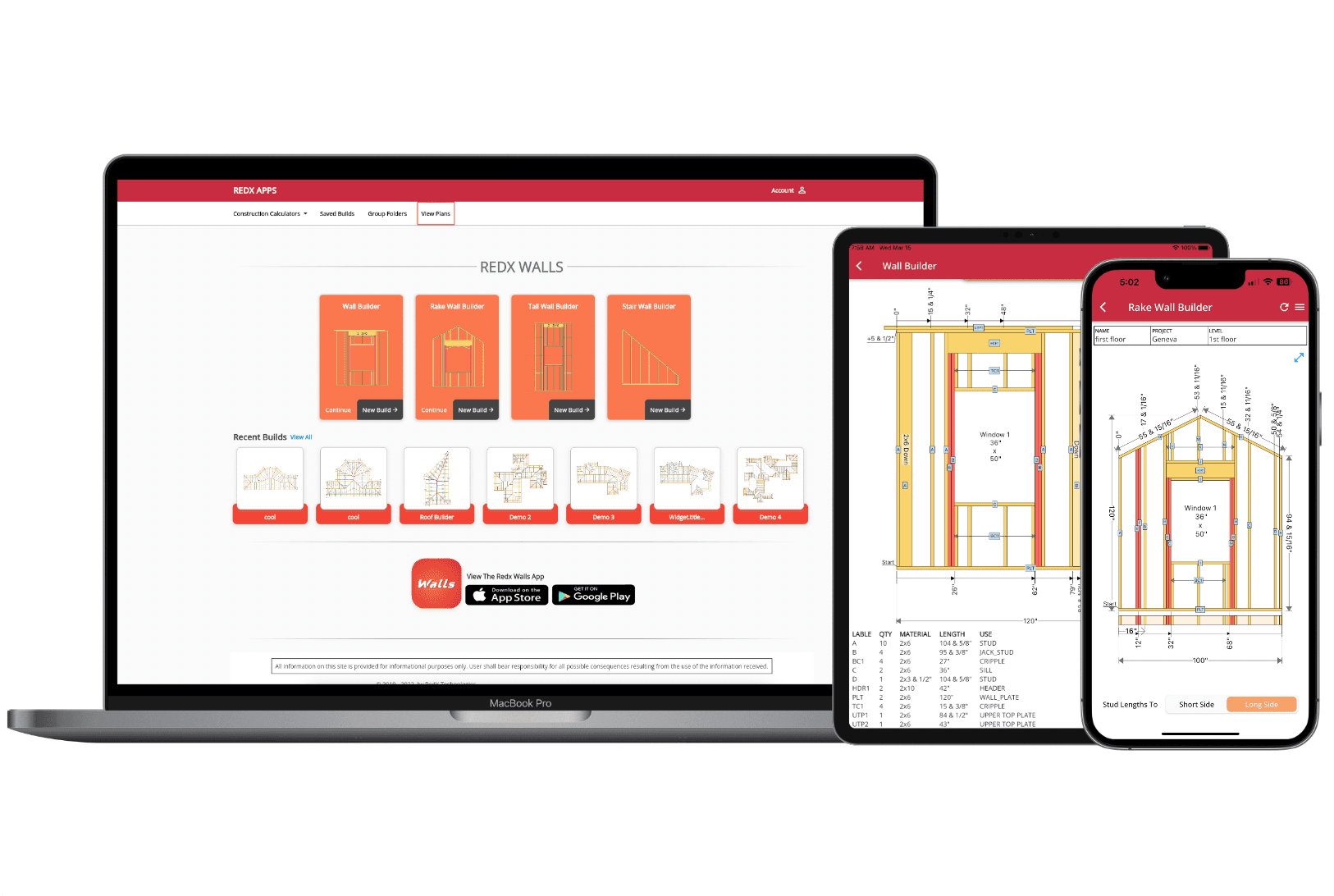
A wall framing calculator lays all of these components out automatically. Enter your wall length and height, add door openings, and the app generates the full diagram with every stud position, header size, and a cut list.
How to Frame an Interior Wall Step by Step
- 1
Mark the Wall Location on the Floor and Ceiling
Snap a chalk line on the subfloor where the bottom plate will sit. Use a plumb bob or laser level to project the line onto the ceiling for the top plate. Make sure the lines are perfectly aligned vertically.
- 2
Cut Plates and Lay Out Stud Positions
Cut the top plate and bottom plate to your wall length. Clamp them together and mark stud positions at 16 inches on center starting from one end. Mark king stud and jack stud locations for any door openings.
- 3
Cut All Studs to Length
For a standard 8-foot ceiling with a doubled top plate, cut studs to 92-5/8 inches. For a single top plate, cut to 93 inches. Cut jack studs to the rough opening height minus 1-1/2 inches (for the bottom plate). Cut cripple studs to fit above headers.
- 4
Frame Door Openings
Position king studs at the edges of each door opening. Nail jack studs to the inside of the king studs. Set the header on top of the jacks and nail through the king studs into the header ends. Add cripple studs above the header at 16-inch spacing.
- 5
Assemble the Wall Flat on the Floor
Lay the bottom plate, studs, and first top plate on the subfloor. Nail through the plates into each stud end with two 16d nails. Check that the wall is square by measuring diagonals.
- 6
Tilt Up, Plumb, and Secure
Lift the wall into position between your chalk lines. Nail the bottom plate to the subfloor and the top plate into the ceiling joists. Check for plumb with a 4-foot level and shim the bottom plate if the floor is uneven. Add the second top plate overlapping any intersecting walls.
Interior Wall Framing Calculator
Enter your wall length, height, and door openings. The calculator generates a complete stud layout diagram with every component positioned, plus a cut list and material summary you can export as a PDF.
Framing an Interior Wall with a Door Opening
Door openings are the most common feature in interior walls. Getting the rough opening right is critical - too small and the door will not fit, too large and you waste shimming material. Here is how to size and frame a standard interior door opening:
Rough Opening Sizing
- Width: Door width + 2 inches (e.g., 30-inch door = 32-inch rough opening)
- Height: Door height + 2-1/2 inches (e.g., 80-inch door = 82-1/2-inch rough opening)
- Jack stud height: Rough opening height (82-1/2 inches for a standard door)
The framing around a door consists of two king studs (full height), two jack studs (trimmed to the rough opening height), a header resting on the jacks, and cripple studs above the header. For non-load-bearing partition walls, the header can be a single 2x4 laid flat. For load-bearing walls, size the header based on the span and the load from above.
After the wall is standing and secured, cut out the bottom plate inside the door opening with a reciprocating saw or hand saw, flush with the jack studs.
Load-Bearing vs Non-Load-Bearing Interior Walls
Load-Bearing Walls
- Support weight from the roof, upper floors, or ceiling joists
- Typically run perpendicular to ceiling joists
- Require properly sized headers (doubled 2x6, 2x8, 2x10+)
- Use 16-inch stud spacing (required by code)
- Cannot be removed without temporary support and a replacement beam
- Often sit above a beam or foundation wall below
Non-Load-Bearing (Partition) Walls
- Only support their own weight and attached drywall
- Can run in any direction relative to joists
- Headers can be a flat 2x4 (just bridges the gap)
- Can use 24-inch stud spacing in some cases
- Can be added, moved, or removed without structural impact
- Used for closets, bathrooms, bedrooms, and room dividers
Corner and T-Wall Framing for Interior Walls
Where interior walls meet other walls, you need to provide a nailing surface for drywall on both sides of the corner. There are two common methods:
Three-Stud Corner
Stack three studs at the corner with blocking between them. This creates a nailing surface on both sides. Uses more lumber but is the traditional approach and very solid.
Two-Stud Corner with Clips
Use two studs at the corner and attach drywall clips for the inside nailing surface. Saves lumber, reduces thermal bridging, and allows insulation in the corner cavity. Increasingly common in energy-efficient framing.
For T-wall intersections (where a partition meets the side of another wall), add a flat 2x6 block or an extra stud in the main wall at the intersection point. This provides backing for drywall inside the corner where the two walls meet.
Generate Your Interior Wall Layout Automatically
Interior Wall Framing FAQ
How do you frame an interior wall?
Mark the wall location on the floor, cut a bottom plate and top plate to length, then lay out stud positions at 16 inches on center. Cut studs to the ceiling height minus the thickness of both plates (typically 92-5/8 inches for an 8-foot ceiling). Nail through the plates into the stud ends, tilt the wall up, and secure the top plate to the ceiling joists and the bottom plate to the subfloor. Add blocking or drywall backing at corners and intersections.
What is the standard stud spacing for interior walls?
The standard stud spacing for interior walls is 16 inches on center. This means the center of each stud is 16 inches from the center of the next. Some non-load-bearing partition walls can use 24-inch spacing to save material, but 16-inch spacing is required for load-bearing interior walls and provides better support for drywall and fixtures like cabinets or TV mounts.
How do you frame an interior wall with a door?
Frame the door opening with two king studs running from plate to plate, two jack studs (trimmers) cut to the rough opening height, and a header spanning between the king studs on top of the jacks. Add cripple studs above the header up to the top plate. The rough opening width is the door width plus 2 inches (for the door jamb) and the rough opening height is the door height plus 2-1/2 inches (for the jamb and shims). For most interior non-load-bearing walls, a single 2x4 or 2x6 flat header is sufficient.
Do interior walls need a header above a door?
Yes. Every door opening needs a header to transfer the load from the top plate across the opening. For non-load-bearing interior walls, the header can be a single 2x4 laid flat since it only needs to support the short cripple studs above it. For load-bearing interior walls, the header must be sized based on the span - typically doubled 2x6, 2x8, or 2x10 lumber depending on the opening width and the load from above.
How do you tell if an interior wall is load-bearing?
A load-bearing interior wall supports weight from the structure above - the roof, upper floors, or ceiling joists. Check if the wall runs perpendicular to the ceiling joists or floor joists above it. Walls that sit directly below a beam, ridge, or another wall above are usually load-bearing. Walls that run parallel to the joists and do not support anything above are typically non-load-bearing partition walls. When in doubt, consult a structural engineer before removing any wall.
What size lumber do you use for interior walls?
Most interior walls use 2x4 lumber for the studs, top plate, and bottom plate. This gives a 3-1/2 inch wall thickness, which is the standard for residential interiors. Use 2x6 lumber (5-1/2 inch wall) for walls that contain plumbing drain lines, for extra soundproofing, or for load-bearing walls that need larger headers. Bathroom walls with plumbing stacks often require 2x6 framing to fit the pipes.
How do you frame a corner where two interior walls meet?
At a T-intersection where a partition wall meets another wall, you need drywall backing on both sides. The standard method is to add an extra stud or blocking in the main wall at the point where the partition connects. This provides a nailing surface for drywall on the inside corner. Another common method is to use drywall clips, which eliminate the extra stud and provide a nailing flange for the drywall at the corner.
What is a partition wall?
A partition wall is a non-load-bearing interior wall that divides space within a building. It does not carry any structural load from the roof or upper floors - it only supports its own weight and the drywall attached to it. Partition walls are the most common type of interior wall in residential construction. They can be added, moved, or removed without affecting the structure of the building, which makes them ideal for room layout changes during renovations.
How tall are studs for an 8-foot ceiling?
For a standard 8-foot (96-inch) ceiling, precut studs are 92-5/8 inches. This accounts for the thickness of three plates: one bottom plate (1-1/2 inches) and a doubled top plate (3 inches). 92-5/8 + 1-1/2 + 3 = 97-1/8 inches, which gives a slightly tight fit against the ceiling when the wall is tilted up, allowing you to shim and secure it. If you are using a single top plate, your studs will be 93 inches.
Can I frame an interior wall without removing the drywall on the ceiling?
Yes. You can frame the wall on the floor and tilt it up under the existing ceiling drywall. Nail or screw the top plate through the drywall into the ceiling joists above. Use a stud finder to locate the joists first. If the wall runs parallel to the joists and does not land on one, install blocking between the joists in the attic or from above to give the top plate something solid to fasten to.
Learn More
Frame Your Interior Walls with Confidence
Plan every stud, header, and opening before you pick up a hammer. The wall framing calculator generates a complete layout and cut list from your dimensions. Free on web, iOS, and Android.